

You may notice that your teen’s prescription for nearsightedness seems to get stronger with every visit to the eye doctor. This ongoing change, known as progressive myopia, can feel like a constant game of catch-up, leaving you to wonder if there is anything you can do to manage it.
Fortunately, with a combination of myopia control treatments and healthy habits, it is possible to help slow the progression of nearsightedness and support long-term eye health.
What Is Progressive Myopia?
Progressive myopia is nearsightedness that continues to worsen over time. This condition often begins during childhood when the eyes are still growing. For many, the prescription changes become less frequent and typically stabilize in the early twenties.
When you are nearsighted, distant objects appear blurry because your eyeball may be slightly too long. Traditional eyeglasses can correct this by focusing light directly onto the retina. However, for a growing eye, this can sometimes signal the eye to keep growing longer, which increases the prescription strength over time.
Why You Should Address Myopia Progression
Managing myopia progression does more than just slow down frequent prescription changes. It is a key step in protecting your family’s long-term visual health. A high degree of myopia can be associated with a greater chance of developing certain eye conditions later in life.
By addressing these changes early, you can help manage your teen’s vision and reduce their dependence on increasingly stronger lenses. A proactive approach provides them with a better foundation for healthy eyes as adults.
Myopia Control Treatments and Therapies
Specialized Eyeglasses and Contact Lenses
Today’s vision technology offers more than just standard lenses. Multifocal soft contact lenses, worn during the day, are designed with different zones to help change how light focuses in the peripheral (side) vision. This adjustment can help reduce the signal that tells the eye to grow longer.
Another option is orthokeratology, or ortho-k. These are specially designed contact lenses worn overnight to gently and temporarily reshape the front surface of the eye. After removing the lenses in the morning, you can often see clearly throughout the day without glasses or contacts.
Low-Dose Atropine Eye Drops
Low-dose atropine drops are a daily treatment prescribed by an eye doctor. These medicated drops work by relaxing the eye’s focusing mechanism, which can help slow down the elongation of the eyeball. This is a simple and effective option that can be used on its own or with other treatments.

Helpful Lifestyle Habits for Healthier Eyes
Balance Your Screen Time
Encouraging breaks from digital devices can make a real difference for your eyes. Constant close-up work puts strain on the eye’s focusing system. You can help reduce this strain by following the 20-20-20 rule—every 20 minutes, look at something 20 feet away for at least 20 seconds.
Also, maintaining a healthy distance between your eyes and your screens helps your eye muscles relax. Holding phones and tablets a little further away gives your eyes a much-needed break from intense, close-up focus.
Spend More Time Outdoors
Getting outside more is great for overall health and can be beneficial for your eyes, too. Exposure to natural daylight may play a role in slowing down myopia progression. Plus, outdoor time naturally encourages your eyes to focus on distant objects, providing relief from near-work.
Create a Myopia Plan with Your Eye Doctor
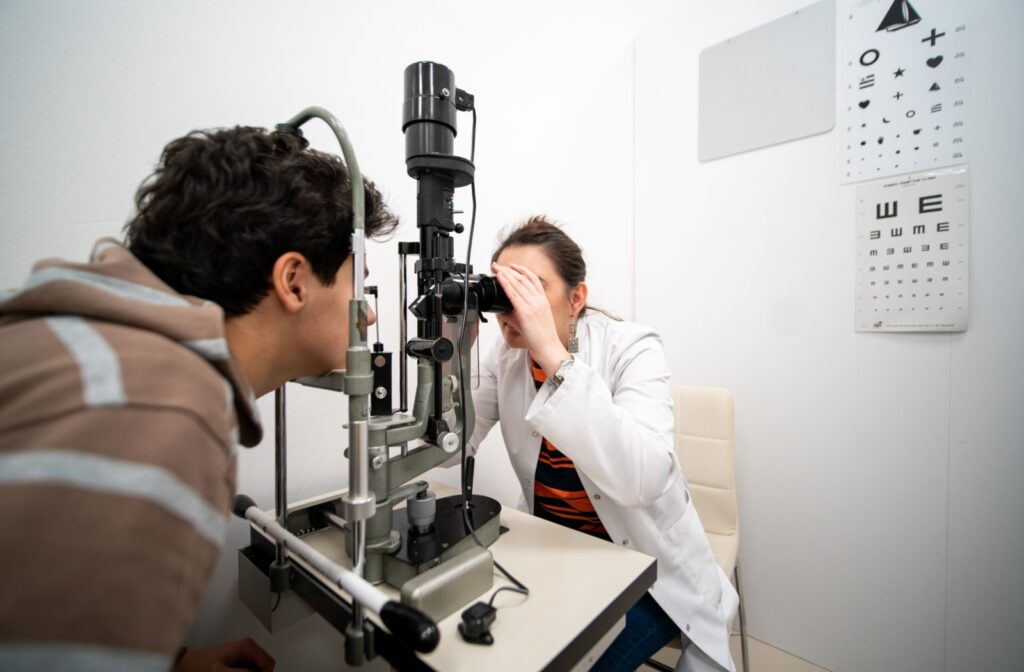
The first step in managing progressive myopia is a comprehensive eye exam. Regular check-ups allow your eye doctor to track vision changes and recommend a suitable course of action.
By discussing the different options available, you can work together to find a comfortable and effective approach. A customized plan can help you successfully manage myopia progression and support a lifetime of clear vision.
Our team is dedicated to providing clear answers and effective vision care for your whole family. Schedule a consultation to discuss a myopia management plan and discover the best options for your teen’s visual health.