

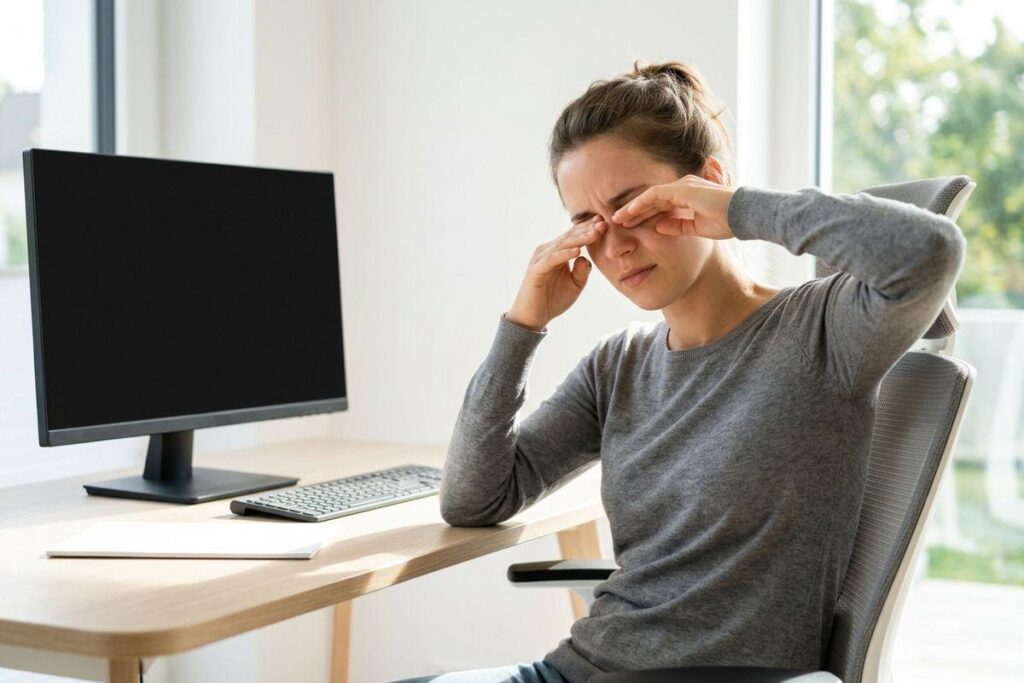
Most of us know the feeling. You wrap up a long stretch of reading or a full day at the computer, and your eyes feel heavy and sore. That’s eye strain, and it happens when the muscles that focus your eyes get tired from working hard without a break.
When screens are the main cause, you’ll often hear it called digital eye strain. It feels much the same, though screens tend to bring a few extra challenges of their own.
Mild eye strain usually fades on its own once you rest your eyes, but if it keeps coming back, a vision problem may be behind it, and a comprehensive eye exam can help you find out.
Common Eye Strain Symptoms
Eye strain shows up differently from person to person. Some people feel it in their eyes first, while others notice a headache creeping in by mid-afternoon. Common signs of eye strain include:
- Eye soreness
- Dry eye
- Watery eyes
- Headaches
- Blurry vision
Your eyes might also feel sore when you blink, or you may find it hard to concentrate on what’s in front of you.
These symptoms tend to appear after close-up work, such as reading or detailed tasks at your desk. Long drives can bring them on too.
Digital screens make your eyes work harder than a printed page does. Text on a screen usually looks less sharp, and glare and reflections can make it tougher to see clearly. People who spend 2 or more hours in a row on a screen each day have the highest risk of digital eye strain (and yes, scrolling on your phone counts).
You may also notice neck and shoulder pain if you lean toward the screen to read it.
Does Eye Strain Go Away on Its Own?
Mild eye strain usually clears up on its own after you rest your eyes. Step away from your screen or close your eyes for a few minutes, and the achy feeling often eases. Eye strain isn’t considered dangerous on its own. Rest eases the symptoms. Whatever made your eyes work so hard in the first place is still there the next day, and if nothing changes, the strain can keep returning and may get worse with more screen time.
If your eyes feel sore day after day or headaches keep showing up, something may be making your eyes work harder than they should. A few common reasons include:
- An uncorrected or outdated prescription
- Glasses that don’t suit the distance of your computer screen
- Trouble with how your eyes focus or work together
- Presbyopia, the gradual loss of close-up focus that often starts in your 40s
- Dry eye
How to Relieve Eye Strain at Home
A few changes to your screen habits can make long days easier on your eyes. Try the 20-20-20 rule: every 20 minutes, look at something 20 feet away for 20 seconds. Set a timer if you tend to lose track of time.
For longer sessions, rest your eyes for 15 minutes after every 2 hours of continuous screen time. And remember to blink. We tend to blink less while staring at a screen, which can leave your eyes feeling dry. Keep artificial tears on hand for those dry moments, and ask your optometrist which type suits your eyes.
Your workspace plays a part, too. Try these adjustments:
- Place your screen 20 to 28 inches from your eyes.
- Set the center of the screen about 4 to 5 inches below eye level.
- Close the blinds or move any lamps that cause glare on your screen.
- Wipe smudges and fingerprints off the display.
Getting enough sleep can also help, since being tired and stressed can make eye strain worse.
How an Eye Exam Can Help with Eye Strain
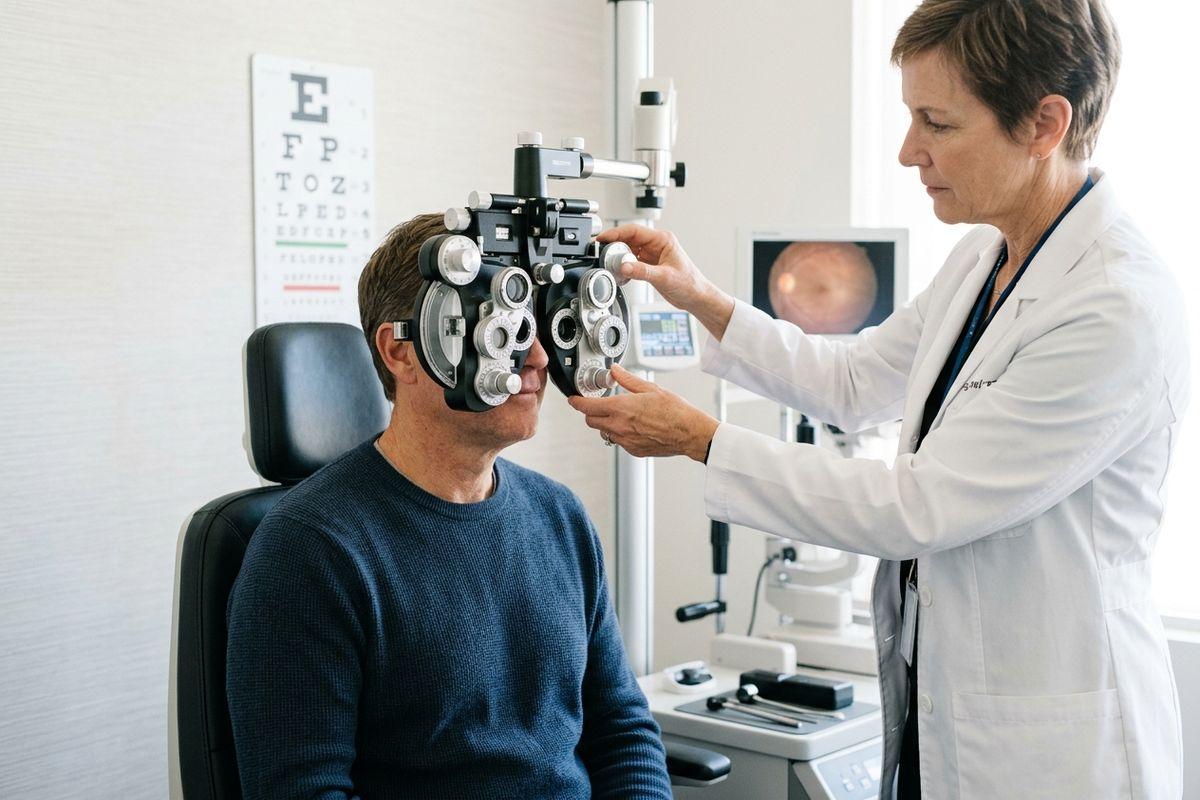
When rest and new habits don’t make a difference, book an eye exam. Your optometrist can look for the issues behind your strain, including changes in your prescription and how well your eyes focus and work together at screen distance.
Tell your optometrist how many hours you spend on screens and how far your monitor sits from your face. Those details can help them recommend lenses that suit your day. Depending on what the exam finds, your optometrist may suggest:
- An updated prescription for glasses or contacts
- Glasses designed for computer distance
- Lens coatings or tints that reduce glare
- Neurolens, which may help if a slight eye misalignment is adding to your symptoms
Double vision or sudden changes in your eyesight need prompt attention, so reach out right away if either one shows up.
Find Out What’s Behind Your Eye Strain
Tired eyes after a long day happen to everyone now and then. When they start showing up every evening, our optometrists at Total Vision Laguna Niguel can help you understand why. Book an appointment and let’s talk about what your eyes need. We test how your eyes perform at the distances you use most, from your phone to your monitor, and build a plan around how you spend your day.