


Most vision loss happens slowly, and your eyes are good at covering for each other while it does. You start holding your phone a little farther away. You turn the brightness up on your laptop. Nothing feels wrong, so nothing gets checked. That’s what makes early changes so easy to miss. They rarely hurt, and blurry vision at the end of a long workday seems simple enough to explain away.
The first signs of vision loss are usually quiet ones: blurriness that comes and goes, side vision that fades, dark spots in your view, or a sudden increase in floaters. Plenty of eye conditions develop without any pain at all, so an exam can find them well before you notice anything on your own.
Blurry Vision Is Often the First Sign
Text on your phone looks sharp, then soft a second later. Street signs take an extra beat to come into focus while you’re driving, and you blink hard to clear things up.
Squinting can also be an early sign. Narrowing your eyes to read a house number means your eyes are working harder than they should, and that extra effort often turns into headaches or tired eyes by evening.
One eye can also fall behind the other without you realizing it. Cover one, then the other, and compare what you see. If you notice a difference, bring it up at your next visit.
Loss of Side Vision
Side vision fades so gradually that you may blame clumsiness instead. You bump a doorframe with your shoulder or knock a cup off the counter you swore you could see.
Over time your view may feel narrow, almost like looking down a tube. Glaucoma is one of the more common reasons behind that pattern, and it usually causes no discomfort in its early stages.
Dark or Empty Spots
A blank patch in the center of your view can make faces or words hard to read. Some people describe it as a smudge that stays put no matter where they look.
Straight lines can also start to bend. If a door frame or the edge of a tile looks wavy, that visual warp deserves attention.
Changes in Color, Light, and Floaters
Colors can start to look dull or washed out. Whites may pick up a yellow or brown tint, and the change can happen so gradually that many people only notice it after one eye has been treated.
How you handle light matters as well. Halos ringing a streetlamp, glare that makes night driving uncomfortable, or new sensitivity to indoor lighting all deserve a mention.
Floaters drift across your view as specks, threads, or tiny cobwebs. A few are normal. A sudden crowd of them, flashes of light, or a shadow creeping in from the edge calls for a same-day appointment.
When Vision Changes Need Fast Attention
Some signs should not wait for your next scheduled visit. Sudden vision loss in one eye is one of them, even if it lasts only a moment. Another is a curtain-like shadow sliding over part of your view. It can feel like a shade pulling down across what you see.
Call us right away if any of these show up:
- Sudden loss of sight in one eye, even briefly
- A dark shadow moving across your field of view
- Eye pain along with hazy or clouded vision
- A burst of new floaters or flashes of light
- Double vision that appears out of nowhere
Getting seen within hours may protect more of your sight.
What an Optometrist Checks During an Eye Exam
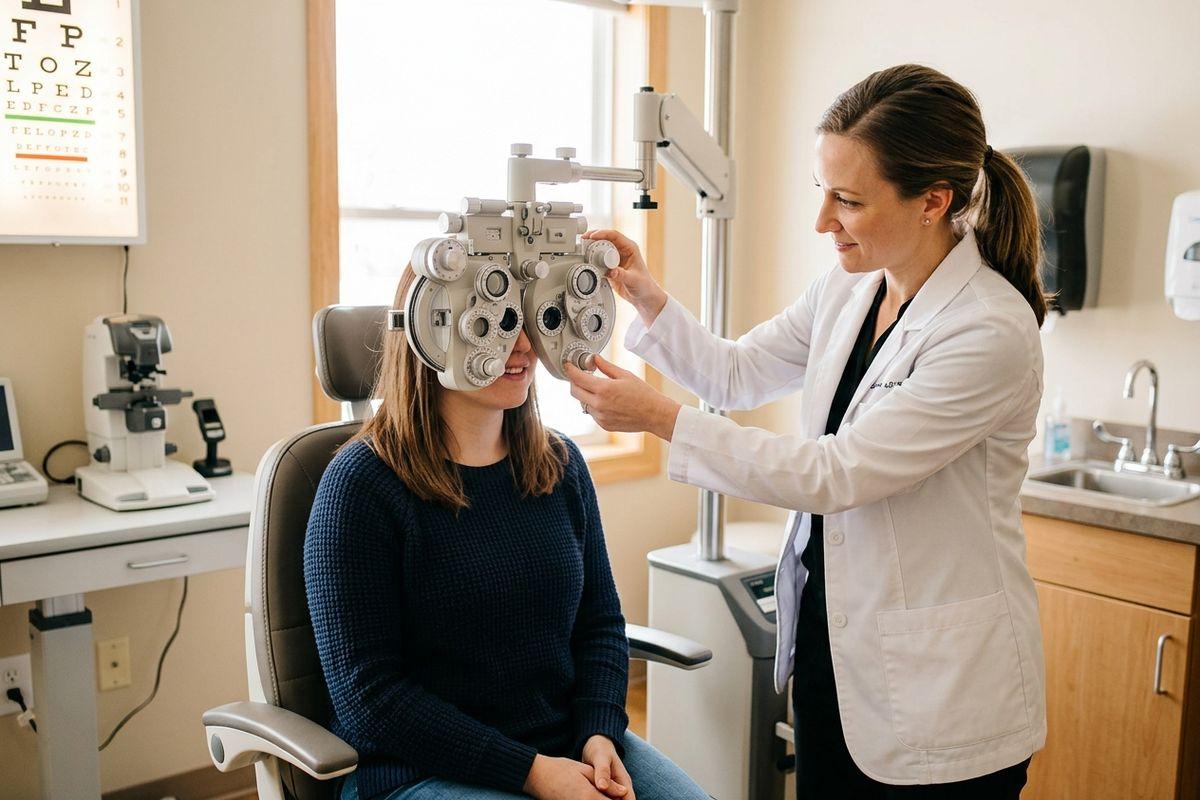
A comprehensive exam looks at far more than how well you read a chart. The team checks the health of your eyes inside and out, from the surface to the tissue behind your pupil.
This exam also screens for conditions like glaucoma and cataracts, which often move quietly in their early stages. An optometrist can spot these changes before you feel any effect on your daily life.
How Often to Schedule an Eye Exam
Most adults do well with an annual visit. That rhythm gives us a baseline to compare against, so small changes stand out instead of blending into the background.
Some people should come in more often. If you have diabetes, a family history of glaucoma, or higher eye pressure, your optometrist may recommend 2 or 3 visits a year. Kids and older adults often benefit from closer monitoring, since their vision can change quickly between appointments.
Get Answers About the Changes You’re Noticing
Your sight shapes how you drive at night and how you read a screen all afternoon. Changes are far easier to manage when someone looks at them early.
Bring your questions to our team at Total Vision Laguna Niguel, and we’ll walk you through what we find and what it means for your day-to-day life. Book your comprehensive eye exam and get a clear picture of what your eyes are telling you.